07:14
07:14

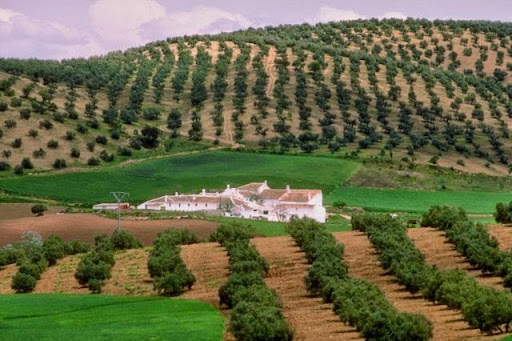
The land in Los Monegros in Aragon in northeastern Spain, is almost as arid as a desert. In the 1960s, it was one of the backdrops chosen for spaghetti western films.
Yet for two twenty-something Spanish sisters, it has become the perfect place for their farming and bread-baking business.
Ana Marcen, the elder of the two, says she had no previous experience in agriculture.
"I studied Greek and Latin and used to work in an orchestra as a singer."
Her younger sister Laura used to work as a waitress and studied engineering.
Their business idea grew out of something their uncle told them - that in times gone by, the bread in this part of Spain tasted different.
It was a flavour he missed.
From seed to loaf
'For the seed we grow, the climate is perfect', two sisters explain why they started a bakery and are growing wheat in a Spanish desert.
The sisters say their uncle was "a very curious person, he used to ask himself why bread didn´t taste any longer as it used to."
They discovered that a type of wheat seed, known as Aragon 03, had been the secret behind the region's distinctly-flavoured bread.
They found an elderly couple who still had a small quantity of the Aragon 03 seed. The Marcens bought two bags of the seeds - and from that their business has grown.
The concept of their business is to control the entire bread-making process.
They grow the wheat, mill the flour and bake the bread, muffins and other bakery snacks.
"Unlike other traditional bakeries that just sell organic products, we control the whole process", says Laura.
 Los Monegros may be very dry - but the Marcen sisters' wheat is well-suited to these conditions
'You must be mad'
They set up their business in 2007, just before Spain's economic and financial crisis hit.
They were able to get a bank loan of €250,000, ($335,000; £200,000) which they think would be harder to come by in today's post-recession climate.
In the first year, their business lost lots of money, but by the third year they broke even.
Now, seven years after they first started farming and baking, they own two bakeries and sell their products in eight others.
Whatever profit they make, they reinvest in their business as they want to expand and sell online.
"Many people told us we were crazy for trying to run a business like ours in a (dry) place like this. But we found out that the seed we grow is perfect for this climate", says Laura.
"People think that there is no life in Los Monegros, but in reality the region is rich in plants and wildlife.
"As my uncle used to say, you have to bend your knees and look closely. For example, I see opportunities where others don't."
 The niche product has a loyal clientele which has been the key to the business turning a profit
Family idea, family business
From the very start, this was a family-run business.
Their father Daniel harvests the crop, their mother Mercedes, works in one of their shops, and their younger brother, Jesus, mills the flour and bakes the bread.
 Posted in: two sisters running a bakery in a desert


 Ulrich says in the interview with the mrror that he was using cocaine up to around ten years ago but, when reading about Gallagher's own experiences with the drug, decided he wanted to stop."I loved the social elements of cocaine. I loved the danger of it," he said. "Then, about 10 years ago, I read an interview with Noel Gallagher, in which he said, 'I just stopped doing cocaine'. I thought that was really cool. It felt so fresh, so honest, so pure - I love that side of him. I've never had an addictive personality, so I woke up one day and said, 'Enough'."In fact, Ulrich says he only began taking cocaine in order to be able to drink more with his bandmates. "In the early days, I'd always get drunk way faster than the other guys," said Ulrich. "I realised that if there was a little bit of cocaine involved I could stay up longer, instead of ending up face down in the corner, passed out three hours before the party ended."